


By using our website, you agree to the use of cookies as described in our Cookie Policy
Ready to apply for business funding?
Start our simple online application now.


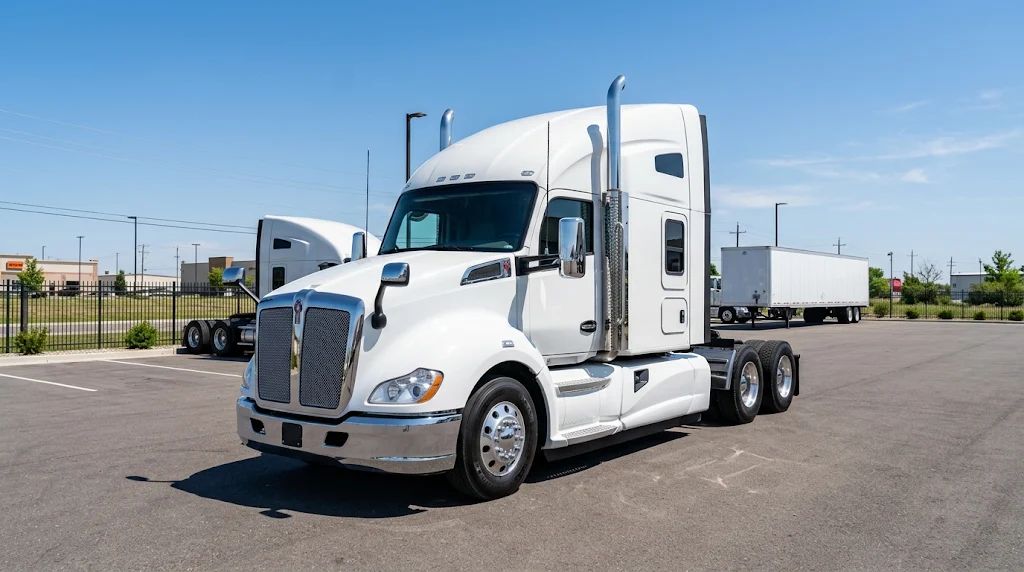
A new Class 8 tractor can cost more than a house in many parts of the country, and a good used one still runs well into six figures. Few carriers pay cash. Semi truck financing spreads that cost over the years the truck earns revenue, and the terms you get, from the rate to the down payment to the length of the loan, decide whether the truck is a profit center or a monthly problem. This guide covers how semi truck loans and leases work, what moves the rate, how much you need down and what lenders check before they approve a tractor.
An equipment loan puts the truck in your name from day one, with the lender holding a lien until the balance is paid. Terms of 36 to 72 months are common. You build equity, you can sell or trade the truck, and you own it outright at the end.
A lease keeps the truck in the lessor's name. Payments are usually lower, and at the end of the term you return the truck, renew, or buy it for a set price. Leases suit operators who want a newer truck every few years or who are managing cash flow month to month; whether you ever own the truck depends on the purchase option and its price. Read the residual value and mileage terms closely, because they decide the real cost.
Semi trailers can be financed separately or, with some lenders, alongside the tractor. Terms depend on the trailer, its age, and the financing program.
Rates on commercial truck financing move with four things:
Take a $120,000 tractor with 10% down, financing $108,000 over 60 months:
| Rate | Monthly payment | Total interest |
|---|---|---|
|
10% |
$2,294.68 |
$29,681 |
|
14% |
$2,512.97 |
$42,778 |
Four points of rate is $218 a month and about $13,100 over the term, which is why it pays to improve the deal before you sign.

See How Much Capital Your Business Can Access & Start Growing Today!
Apply NowExpect to be asked for a down payment, and expect the size to track your risk profile. Operators with strong credit and a trade-in may put down little or nothing; new carriers and buyers of older trucks are often asked for 10% to 25%. Some lenders will take the first and last payment in place of a percentage down. Our guide to down payments on business loans explains how lenders set the number and what counts toward it.
Used trucks dominate the owner-operator market, and financing follows the asset. The questions a lender asks about a used tractor are the ones you should ask too: age, mileage, engine and aftertreatment history, how many owners, and whether the price matches the market. Older trucks mean shorter terms and higher rates, and some lenders cap how old the truck can be at the end of the term. Our article on used equipment financing covers appraisals and private-party purchases in more depth.
The American Transportation Research Institute's 2026 report put the cost of operating a truck at $2.336 per mile in 2025, up 3.4% and the highest in the report's history, with operating margins for truckload carriers below 1% (ATRI, July 2026). The same report found small fleets spent less on trucks and trailers in 2025 than the year before. When the margin on every mile is that thin, the truck payment is one of the few costs you set before the truck turns a wheel, and a point of rate or a year of term can change whether a lane is profitable.
Lenders financing a semi tractor look at:
Most programs want an operating history, so a first-time buyer's options are narrower. Those without one can sometimes close the gap with a larger down payment, a co-signer, or a lease-purchase through a carrier, though lease-purchase terms deserve careful reading.
Dealers, banks, credit unions, equipment finance companies and online financing platforms all finance tractors, and they price differently. Dealers are convenient but may mark up the rate. Banks offer the lowest rates to the strongest borrowers and decline most others. Equipment finance companies specialize in trucks and are more flexible on credit and truck age. Established transportation businesses can apply for equipment financing through BusinessCapital.com, a financing platform that matches businesses with funding partners, with payment plans up to 72 months and financing available for new or used equipment. Compare at least two offers on the same truck, and compare the total cost, not just the payment.
Semi truck financing is one piece of a carrier's funding picture. Our guide to trucking business loans covers working capital, lines of credit and factoring for owner-operators and fleets, and the transportation and logistics funding page sets out the options by product. For vocational trucks, see our articles on dump truck financing and box truck financing, and for the broader product, the equipment financing page.
How long can you finance a semi truck?
Terms of 36 to 72 months are typical. Newer trucks qualify for the longer end; older, high-mileage tractors are usually limited to shorter terms.
How much do you need down for a semi truck?
It ranges from nothing for strong borrowers with a trade-in to 10% to 25% for new carriers or older trucks. A few programs accept the first and last payments in place of a percentage.
Can you finance a semi truck with bad credit?
Often, yes. Specialist equipment lenders serve owner-operators with past credit problems, but expect a higher rate, a larger down payment and a shorter term.
Is it better to lease or buy a semi truck?
Buying builds equity and suits operators who keep trucks for years. Leasing may provide lower payments and more frequent replacement opportunities, while ownership depends on whether the agreement includes a purchase option and whether you exercise it. The answer depends on how long you plan to run the truck and how much cash you need to keep free.
Can a new owner-operator get semi truck financing?
Yes, with trade-offs. Without a revenue history, lenders lean on credit, driving experience, a larger down payment or a co-signer, and the rate will reflect the added risk.


Sign up for our newsletter to get exclusive updates and offers

Start our simple online application now.

See what our clients have to say about their experience with us.

© 2026 BusinessCapital, LLC
