



By using our website, you agree to the use of cookies as described in our Cookie Policy
Ready to apply for business funding?
Start our simple online application now.


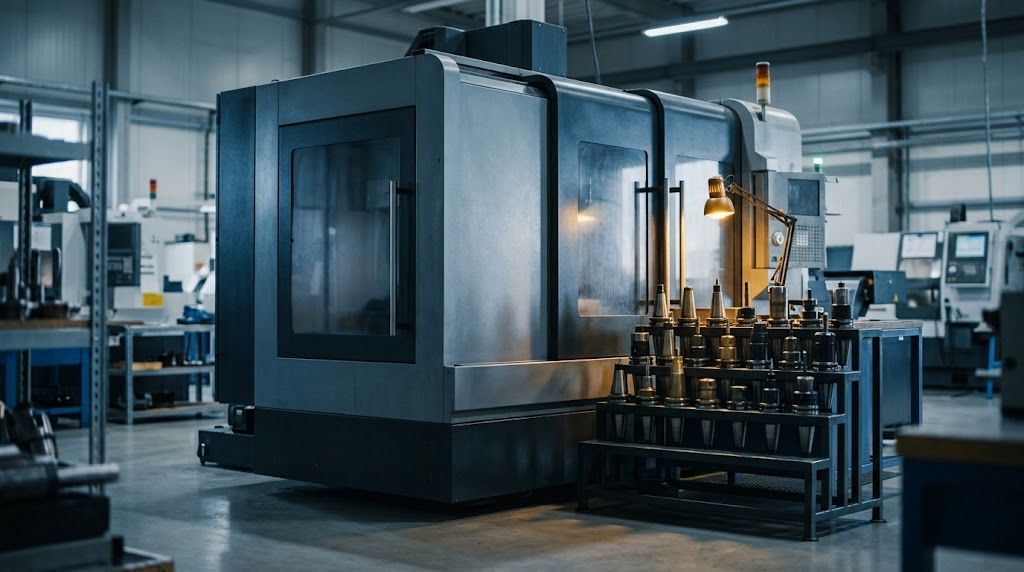
When a shop needs a new machining center, lathe, five-axis machine, router or cutting system, CNC machine financing spreads the cost over a set term instead of requiring cash up front, with the machine serving as collateral. It is usually structured as an equipment loan or a lease. Lenders weigh the machine's resale market, which depends on brand, configuration, age and spindle hours, along with the shop's revenue, customer base and credit. Terms are generally set so the machine is paid off well within its productive life.
Lenders differ on how much of the related costs they will include. Some finance a complete package from a single vendor quote, while others cover only the machine. Ask early, because installation and power upgrades can be a meaningful share of the total.
According to AMT's U.S. Manufacturing Technology Orders report, released October 12, 2026, new orders of metalworking machinery totaled $732.9 million in August 2026, up 21.0% from July and 36.3% from August 2025. Orders for the first eight months of 2026 reached $4.76 billion, a 36.9% increase over the same period in 2025. AMT also reported that order growth from contract machine shops exceeded overall market growth in August. These figures measure the dollar value of orders, so pricier and more automated machines can account for part of the increase.
For a job shop, a busy machinery market cuts both ways. Strong orders from contract shops suggest there is work to justify new capacity, but they can also mean longer lead times and less room to negotiate. Having financing approved before you sign a purchase order keeps you from losing a delivery slot.

See How Much Capital Your Business Can Access & Start Growing Today!
Apply NowBefore signing, run the numbers the way a lender will. Let's say a shop finances a $250,000 machine over 60 months at 9% interest. The monthly payment would be about $5,190. If the machine adds 120 billable spindle hours a month at a shop rate of $95 an hour, it brings in roughly $11,400 a month in added revenue. That is gross revenue, before materials, labor, tooling, maintenance and other added costs, so the shop needs to work out how much cash remains after those costs and compare it with the roughly $5,190 payment. If the machine would sit idle half the time, the margin shrinks quickly, and a lease or a used machine might be the better fit.
Machine builders and dealers commonly ask for a deposit when the order is placed, with the balance due on delivery or installation. With lead times stretching in a busy market, ask the lender how it handles deposits, whether it can fund progress payments and when payments on the loan or lease begin.
| Equipment loan | Fair market value lease | Lease with $1 buyout | |
|---|---|---|---|
|
Ownership |
Shop owns the machine |
Lessor owns it during the term |
Shop owns it after the final payment |
|
Upfront cost |
Down payment may be required |
Often first and last payment |
Often first and last payment |
|
End of term |
Machine is yours |
Return, renew or buy at market value |
Buy for a nominal amount |
|
Best for |
Machines you will run for a decade or more |
Technology you expect to upgrade |
Shops that want ownership with lease-style payments |
Many shops buy core machines they expect to run for years and lease equipment where control or automation technology moves fast. If you lease, check whether service is included and whether you can upgrade mid-term. The case for keeping cash in the business rather than paying outright is laid out in our article on why equipment financing beats paying cash in manufacturing.
A used machine can cost far less, and well-maintained CNC equipment from established builders often holds its value. Lenders will want the machine's age, spindle hours, control model, service history and any rebuilds. An inspection, or a dealer's certification on a reconditioned machine, makes a used purchase easier to finance. Some dealers offer reconditioned machines with a limited warranty, which can bridge the gap between new and used pricing. Older controls can be harder to support and resell, which can shorten the term a lender will offer.
When one lender is reluctant to fund a specialized machine it would struggle to resell, it pays to compare other options. Through a financing platform such as BusinessCapital.com, equipment financing is available for businesses in every industry, with payment plans of up to 72 months.
Shops that already own paid-off machines can also raise cash through an equipment sale-leaseback, and those waiting on slow-paying customers can look at manufacturing invoice factoring. For more on how manufacturers use financing, see the manufacturing funding page. Shops in adjacent trades face similar questions, as our guide to printing equipment financing shows.
Can you finance a used CNC machine?
Yes. Lenders finance used CNC equipment regularly, though they look closely at age, spindle hours, control model and service history, and may offer shorter terms on older machines.
Can a new machine shop get CNC machine financing?
With some lenders, though terms are stricter. Lenders weigh the owner's credit, experience and any customer commitments more heavily when the shop has little revenue history.
Does CNC financing cover tooling and installation?
Sometimes. Some lenders finance a full package from one vendor quote, including tooling, software and installation, while others cover only the machine.
Should a shop lease or buy a CNC machine?
Buying usually makes sense for machines you will run for many years. Leasing can suit equipment you expect to replace as technology changes, or when preserving cash is the priority.
How long are CNC machine financing terms?
They vary with the machine's expected life, its age and the lender. New machines generally support longer terms than older used equipment. Matching the term to the hours you expect to run the machine keeps payments in line with the work it produces.


Sign up for our newsletter to get exclusive updates and offers

Start our simple online application now.

See what our clients have to say about their experience with us.

© 2026 BusinessCapital, LLC
