



By using our website, you agree to the use of cookies as described in our Cookie Policy
Ready to apply for business funding?
Start our simple online application now.



Most equipment finance answers the same question: how do I pay for a machine I do not yet own? A sale-leaseback answers the opposite one. How do I get cash out of machines I already own outright, without stopping work?
You sell the equipment to a finance company and lease it straight back. The cash lands in your account. The machine never leaves the floor.
Conventional equipment financing is forward-looking. You are buying an asset, the lender advances against the purchase, and the equipment secures the deal. The transaction and the acquisition happen together.
A sale-leaseback is backward-looking. The asset is already yours, already earning, and already paid for. What is trapped is the capital you spent acquiring it, sometimes years ago. The transaction converts that trapped capital back into cash while leaving the operational picture untouched.
The comparison that matters sits elsewhere: between a sale-leaseback and the alternatives for raising the same amount: an unsecured loan at a higher rate, a line of credit against a smaller limit, or selling the equipment outright and losing the capacity.
Not everything qualifies. Finance companies look for equipment with a verifiable market value, meaningful useful life remaining, and a resale market if the arrangement fails. Free-and-clear ownership is simplest, although some providers can retire an existing lien where sufficient equity remains.
That favours machine tools, commercial vehicles, construction plant, printing and manufacturing equipment, and medical or dental equipment. It works poorly for anything highly customised, rapidly depreciating, or difficult to move.
Age matters less than people assume. A well-maintained ten-year-old machine with a strong secondary market can be a better candidate than a specialised three-year-old asset nobody else can use.
Sale-leaseback sits inside the broader equipment finance market, and that market is currently active rather than stressed.
The Equipment Leasing and Finance Association reported that its CapEx Finance Index recorded $10.5 billion of new business volume in June 2026, with year-to-date volume up 11.3 percent on the same period in 2025, and noted that the industry-wide delinquency rate had dropped to a multi-year low.
Those figures describe equipment finance as a whole. The cited index does not break the sale-leaseback submarket out separately. Read them as context on lender appetite rather than as evidence about sale-leaseback pricing. The practical takeaway is unchanged either way: get more than one quote, because valuations of the same asset vary more than most owners expect.
You give up ownership. At the end of the lease you may have a purchase option, often at a nominal or fair-market price, but during the term the finance company owns the asset.
You take on a fixed obligation. Lease payments are due whether or not the machine is busy, which is a real consideration for seasonal operations.
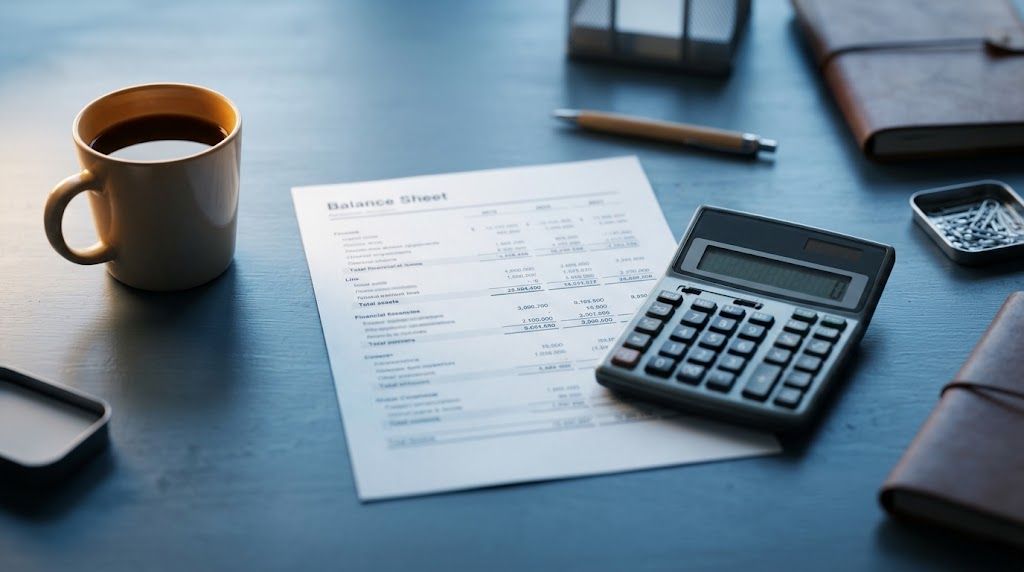
You change the tax and accounting picture. Depreciation, deductibility of lease payments, and how the arrangement sits on your balance sheet all shift, and the treatment depends on how the lease is structured. Speak to your accountant before signing rather than afterwards, because the structure is difficult to unwind.
And the total cost over the term will exceed the cash you receive. That is true of every financing arrangement, but it is worth stating explicitly when the asset in question is already paid for.

See How Much Capital Your Business Can Access & Start Growing Today!
Apply NowThe single most useful preparation is knowing what your equipment is genuinely worth to someone else.
Providers may value using fair market value, orderly liquidation value or another appraisal basis rather than replacement cost or book value, and those numbers can differ enormously. A machine carried at $200,000 on your books, costing $340,000 to replace new, might support an advance based on a market value nearer $120,000.
Maintenance records move that number more than almost anything else. Documented servicing, original manuals, and a clean ownership history all raise the valuation, because they lower the provider's cost of reselling if it ever comes to that. Assemble that paperwork before you request quotes rather than after, since the first valuation tends to anchor the negotiation.
It fits when you hold substantial equity in equipment, need working capital, and would rather not add an unsecured obligation at unsecured pricing. Because the finance company has a tangible, resaleable asset behind the deal, terms are usually better than what the same business would be offered without collateral.
It suits businesses that are asset-rich and cash-poor, which is a common position after a period of heavy investment. It also suits situations where a defined opportunity, an acquisition, a large order, a new site, needs funding and the equipment is the strongest asset available.
It does not suit a business whose underlying problem is that it cannot cover its existing obligations. Converting owned equipment into cash and a new monthly payment makes that position worse, not better. Where the need is a recurring gap rather than a one-off requirement, a revolving line of credit is the more sensible structure.
BusinessCapital.com is a national business financing platform with over $10 billion deployed and an A plus BBB rating, and its funding options span both asset-backed and cash-flow structures, which is worth knowing before you commit an owned asset to one of them. If you are still weighing the basics, how equipment financing works is the place to start.
How much cash can I raise in a sale-leaseback?
Typically a percentage of the equipment's appraised market value rather than what you originally paid. Advance rates vary by asset type, condition and resale depth, so get a valuation before building plans around a number.
Can I do a sale-leaseback if the equipment still has finance on it?
Usually not while a lien remains. Some providers will pay off the existing balance as part of the transaction and lease back the asset, which effectively refinances and releases equity in one step.
Do I keep using the equipment during the lease?
Yes. Continuous use is the entire point. The asset stays in place and in production; only the ownership and the payment obligation change.
What happens at the end of the term?
It depends on the agreement. Structures range from a fair market value purchase option to a lease extension or return of the asset. End-of-term terms materially change the total cost, and they also bear on how the arrangement is characterised: UCC section 1-203 provides that a transaction in the form of a lease may create a security interest depending on the facts. Confirm the structure and take advice before signing.
Is a sale-leaseback a sign of financial distress?
Not inherently. Plenty of well-capitalised businesses use it deliberately to redeploy capital from static assets into growth. It becomes a warning sign only when it is being used to cover obligations the business cannot otherwise meet.


Sign up for our newsletter to get exclusive updates and offers

Start our simple online application now.

See what our clients have to say about their experience with us.

© 2026 BusinessCapital, LLC
