


By using our website, you agree to the use of cookies as described in our Cookie Policy
Ready to apply for business funding?
Start our simple online application now.


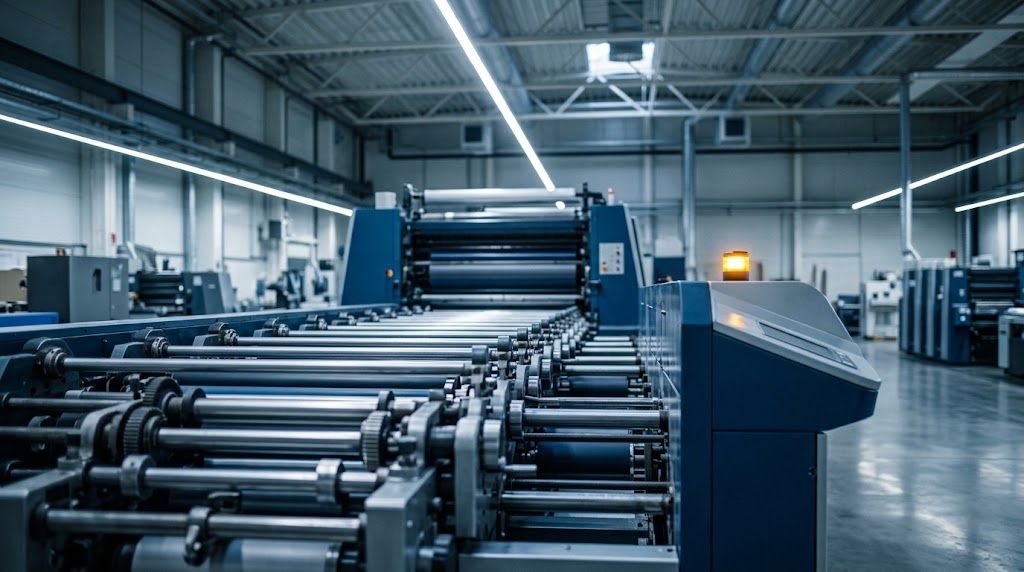
A press is a long lived asset bought out of a short cash cycle, which is one reason many print shops finance rather than buy outright. Printing equipment financing covers sheetfed and web offset presses, digital production presses, wide format and flatbed machines, and the finishing kit that decides how much of a job stays in house: cutters, folders, stitchers, perfect binders, laminators and die cutters. Prepress systems and the workflow software that drives them may be financeable with the hardware, depending on the provider and the transaction.
The Bureau of Labor Statistics reported 27,291 private establishments in printing and related support activities in the first quarter of 2026. Seasonally adjusted industry employment stood at about 338,500 in August 2026, according to Industries at a Glance.
That establishment count illustrates how dispersed the sector is. Print shops acquire equipment through manufacturers, through dealers, and through the used equipment market when shops close or re-equip, which makes independent equipment financing one of several available routes rather than a fallback.
Those buying routes differ in what they demand at application. A new machine bought from a manufacturer normally arrives with a clean invoice and a delivery schedule, which is the simplest case to fund. A dealer sale of used equipment adds questions about provenance, title and service history. An auction purchase is harder again, because funds are often committed before inspection is complete and before a provider has seen the machine, so arrange the finance conversation ahead of the sale rather than after it.
Providers price against the machine as much as the borrower, so the specification of what you are buying shapes the offer.
Resale depth. A common configuration from a well supported manufacturer has a real secondary market. A heavily customised line with a thin installed base does not, and that shows up in the advance and the term offered.
Age and hours. Used equipment is routinely financed in this sector, but impression counts, service history and whether the machine has been under a maintenance contract all matter. Ask the seller for the meter reading and the service record before you apply, because the provider will.
Installation and rigging. A press is not delivered on a pallet. Rigging, floor preparation, power and air, and manufacturer commissioning can add meaningfully to the project. Confirm whether these soft costs can sit inside the financed amount or whether they have to be funded separately, since that changes how much cash you need on day one.
Consumables and click charges. Digital presses often carry a separate service and click agreement with the manufacturer. That contract is not part of the equipment finance and runs on its own terms. Read both, because together they determine the real monthly cost of running the machine.
Through BusinessCapital.com, a national business financing platform with over $10 billion deployed and an A+ BBB rating, equipment financing runs up to $10 million with repayment terms up to 72 months, and new or used machinery can be funded. Longer terms lower the monthly payment on a press expected to run for a decade. Shorter terms suit digital equipment on a faster replacement cycle.
The equipment commonly serves as collateral for the financing. Depending on the structure, the provider may file a UCC financing statement to perfect its interest, and what that filing means in practice is set out in what is a UCC filing.

See How Much Capital Your Business Can Access & Start Growing Today!
Apply NowPrint shops run equipment on very different clocks, and the finance should follow the asset rather than a house default.
A well specified offset press is a long horizon purchase. Machines of that kind are routinely still earning after a decade, which supports a longer term and a lower monthly payment. A production digital press ages differently. Speed, color handling and substrate range move quickly, and a shop expecting to re equip inside five years gains little from spreading payments across six.
Finishing equipment sits between the two. A guillotine or a folder is mechanically simple and holds its value, whereas automated inline finishing tied to a specific press generation is worth roughly what that generation is worth.
A cash flow argument runs alongside the asset one. Work booked against a new machine rarely arrives at full volume on day one, so the payment schedule and the production ramp deserve to be considered together. Shops moving into a new format often find the first two quarters slower than the business case assumed.
It also pays to know what the rest of the business can absorb before adding a fixed monthly commitment. The working capital ratio gives a quick read, and where short term gaps are the real constraint a line of credit answers a different question from an equipment facility.
A shop that owns presses outright has a second option. A sale and leaseback converts owned equipment into working capital while the machine stays on the floor and keeps producing, which is covered in equipment sale leaseback. Print shops with older paid off iron sometimes use it to fund a digital addition without touching their operating cash.
Have the vendor quote or invoice with the full specification, the delivery timetable, and the soft cost breakdown. If the machine is used, add the meter reading, service history and seller details. Recent business bank statements are standard, and a straightforward way to see what an application rests on is business loans based on bank statements.
Can used printing equipment be financed?
Yes, and it is common in this sector given how much equipment changes hands through dealers and auctions. Expect more scrutiny of age, impression count and service history, and expect the term offered to reflect the remaining useful life rather than the life of a new machine.
Does financing cover installation and rigging?
Sometimes. Soft costs such as rigging, commissioning and training can often be included, but this varies by provider and by how the vendor invoices them. Ask before you sign the equipment order, not after.
What term lengths are available for printing equipment?
Terms run up to 72 months. The right length depends on how long you expect to run the machine and how quickly the technology in it dates, which is why digital and offset are often financed over different periods.
Is a service or click charge contract part of the finance agreement?
No. Manufacturer service and click charge agreements are separate contracts with their own terms and their own escalation clauses. Budget them alongside the finance payment rather than inside it.
What if I want to finance equipment I already own?
That is a sale and leaseback rather than an equipment purchase. The provider buys the machine and leases it back, releasing cash against equipment that stays in production.


Sign up for our newsletter to get exclusive updates and offers

Start our simple online application now.

See what our clients have to say about their experience with us.

© 2026 BusinessCapital, LLC
