

By using our website, you agree to the use of cookies as described in our Cookie Policy
Ready to apply for business funding?
Start our simple online application now.


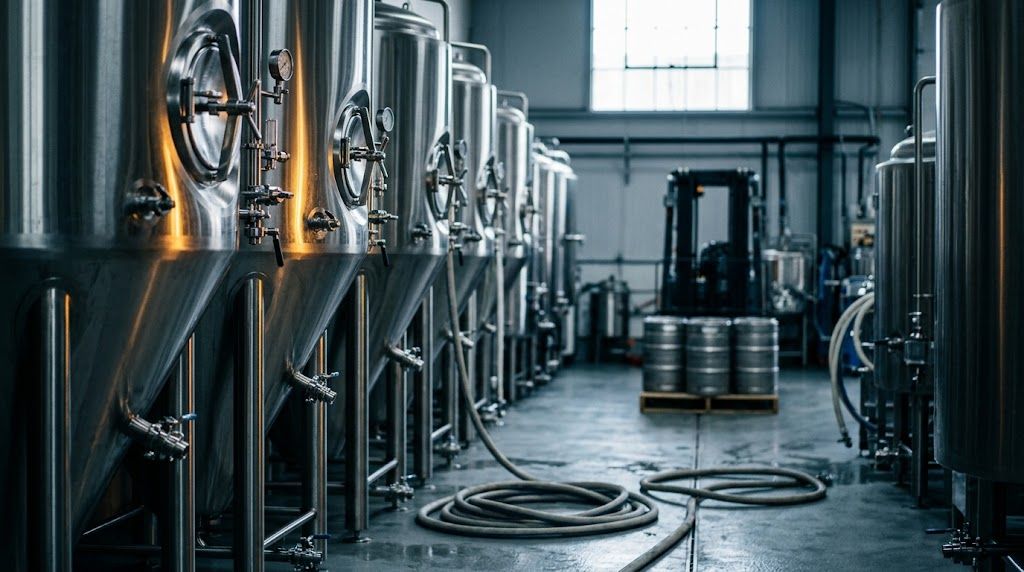
Brewery loans fund the expensive parts of making and selling beer: the brewhouse, fermenters and brite tanks, canning or bottling lines, cold storage, taproom build-outs and the working capital to buy ingredients and cover distributor payment terms. The main options are equipment financing secured by the brewing equipment itself, SBA loans for larger projects and real estate, term loans for expansion and lines of credit for seasonal swings. An established brewery with several years of sales history will find far more options, and better terms, than a brewery that has yet to open.
Lenders look at the market before they look at your numbers. According to the Brewers Association's 2025 industry data, the number of operating U.S. craft breweries fell 2.9% to 9,578 in 2025. Openings dropped to 300 while closures fell to 481, and craft production declined 4% amid broader softness in beer sales.
Two practical effects follow. Lenders tend to ask harder questions about sales channels and margins than they did during the industry's boom years. At the same time, closures put used brewing equipment on the market, which can lower the cost of expansion for breweries that are growing.
| Need | Common financing | What to watch |
|---|---|---|
|
Brewhouse, fermenters, brite tanks |
Equipment financing or lease |
Resale value of the equipment; installation and utility upgrades |
|
Canning or bottling line |
Equipment financing or lease |
Whether packaged volume justifies the line versus mobile canning |
|
Building purchase or major build-out |
SBA 504 or 7(a) loan |
Longer approval timeline; equity injection |
|
Taproom or second location |
Term loan or SBA 7(a) |
Lease terms, local licensing, build-out overruns |
|
Ingredients, packaging, seasonal inventory |
Line of credit |
Draws should be repaid as sales come in |
For property, the choice between SBA programs is covered in our comparison of SBA 7(a) and 504 loans. For the ingredient and packaging purchases that pile up before summer, a revolving facility works much like the inventory financing other product businesses use.
Tanks get the attention, but a working brewery runs on supporting equipment that can also be financed: glycol chillers, boilers, cold storage, keg washers, kegs, grain handling, quality-control lab equipment and forklifts. Taproom fixtures such as draft systems and walk-in coolers can be part of the same request. Bundling these into one equipment request can be simpler than paying for them piecemeal, as long as the lender is comfortable valuing each item.
Sales by channel. Taproom sales usually carry the highest margin. Distribution adds volume but comes with lower margins and payment terms set by distributors. Lenders want to see the split and how it is trending. When distributors pay on terms, the brewery carries the cost of beer that has already left the building, so growth in distribution can tighten cash even as volume rises.
Margins and costs. Ingredient, packaging and energy costs can move quickly. A lender will look at gross margin over several years, not just the most recent one.
Licensing and compliance. Breweries need a Brewer's Notice from the federal Alcohol and Tobacco Tax and Trade Bureau, plus state and local permits, to operate. Lenders will confirm they are current, since a lapse can stop production.
The equipment. Brewing equipment from recognized fabricators generally has a resale market, which helps it serve as collateral. Custom or heavily modified systems can be harder to value.
Seasonality. Many breweries sell more in summer and around holidays. Lenders want to see that the business can carry its debt payments through slow months. Our guide to seasonal business loans looks at financing built around that pattern.

See How Much Capital Your Business Can Access & Start Growing Today!
Apply NowCapacity decisions are a common place for breweries to overextend. Adding fermenters and a canning line ahead of demand raises fixed payments before the sales exist to cover them. Lenders tend to favor phased expansion: add tanks as taproom and distribution volume prove out, and consider contract or mobile canning until packaged volume justifies a line. A financing plan that steps up with sales is easier to approve and easier to live with.
A brewery with three or more years of financial statements, steady taproom revenue and existing distribution can usually finance new tanks or a packaging line on standard equipment terms. A brewery that has not opened yet is a startup, and lenders will expect a meaningful owner investment, a detailed business plan, a signed lease and often an SBA structure. Used equipment can lower the amount a new brewery needs to borrow, but it does not change the fact that there is no sales history yet. Restaurant-style brewpubs face many of the same questions covered in our guide to restaurant business loans.
Financing platforms, including BusinessCapital.com, provide access to equipment financing alongside SBA loans and lines of credit, which lets a brewery compare structures for tanks, packaging and expansion through one platform.
Can you get an SBA loan for a brewery?
Yes. Breweries can use SBA 7(a) loans for equipment, working capital and expansion, and SBA 504 loans for buildings and major fixed assets, subject to SBA eligibility rules and lender approval. Expect a longer approval process than for equipment financing alone.
Can you finance used brewing equipment?
Yes. Used tanks and brewhouses are commonly financed, and lenders will look at the equipment's age, condition and fabricator when setting terms.
What do lenders want from a brewery startup?
A detailed business plan, a meaningful owner investment, a signed lease or property plan, relevant brewing and management experience, and a realistic sales forecast by channel. Lenders also look closely at the location and the lease terms.
Should a brewery lease or buy equipment?
Buying usually suits core equipment like tanks that last many years. Leasing can suit packaging technology that changes or equipment needed for a limited period, and it can preserve cash for working capital in the first years.
Can a line of credit help with seasonal sales?
Yes. A line of credit can fund ingredients and packaging ahead of busy months, with draws repaid as summer and holiday sales come in.



Sign up for our newsletter to get exclusive updates and offers

Start our simple online application now.

See what our clients have to say about their experience with us.

© 2026 BusinessCapital, LLC
