






By using our website, you agree to the use of cookies as described in our Cookie Policy
Ready to apply for business funding?
Start our simple online application now.


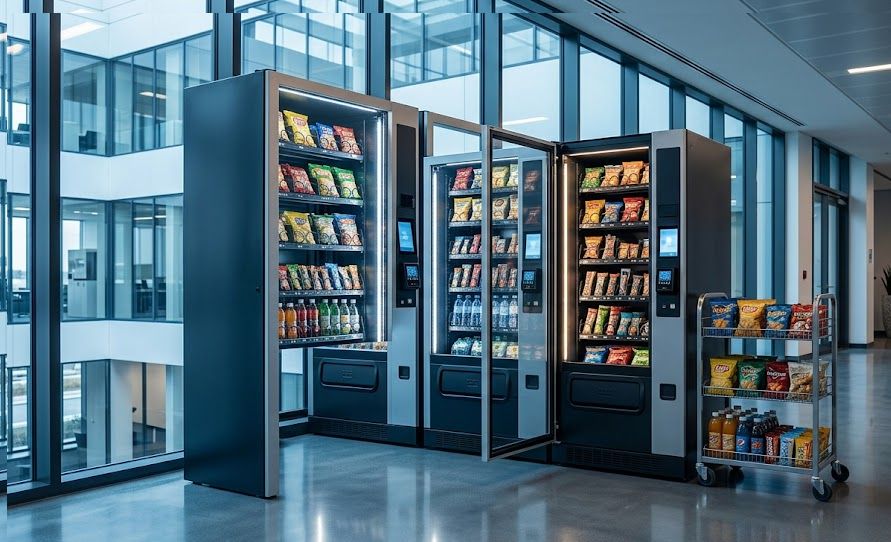
Vending machine financing usually means equipment financing, where the machines you buy secure the loan, combined with working capital products that cover inventory, location fees, and route expansion. New machines commonly cost several thousand dollars each, smart machines and combo units cost more, and a route only earns after the machines are placed and stocked. Financing lets an operator add machines out of future sales instead of savings. BusinessCapital.com funds vending operators through equipment financing and revenue-based products, with approvals built on monthly deposits rather than a long credit file, and this guide covers how each option works and how to qualify.
The vending business looks simple from the outside: buy a machine, place it, collect. The capital picture is busier. Machines are the obvious cost, and a serious route needs many of them. Refrigerated and frozen units, credit card readers, and telemetry systems push the per-machine price up. Inventory is the quiet second cost, since every new placement means stocking product before a single sale clears. Then come the vehicle, the location commissions some sites require, and the occasional chance to buy an existing route from a retiring operator, which is often the fastest way to scale and the most capital-hungry.
US vending machine operators generated $7.9 billion in 2026. Cashless readers, remote monitoring, and healthier product mixes separate the routes that grow from the ones that fade, and every one of those upgrades is a purchase before it is a profit.
For the machines themselves, equipment financing is the natural structure. The lender advances the purchase price, the machines serve as collateral, and you repay over a term matched to their working life. Because the loan is anchored to a specific asset with a known cost, approval is more accessible than unsecured borrowing, down payments are often low or waived, and a vendor quote does most of the paperwork's job. The same structure covers used machines, though expect the lender to ask about age and condition, and it covers upgrades like card readers and telemetry when they are part of a purchase.
Two practical notes for vending specifically. First, finance the machine for less time than it will earn, so the last year of payments never outlives the asset. Second, if you are buying several machines over a year, ask about financing them in stages rather than one large note, since staged purchases keep payments aligned with the revenue each new placement adds.
Product does not finance itself, and neither do the gaps between placement and profit. A business line of credit fits the restocking rhythm of a route, letting you draw for inventory ahead of strong weeks and repay as coins and card payments settle. Larger stock-ups, like winning a placement in a busy facility, can lean on inventory-focused financing. A short-term loan suits a defined move with a clear payback, and buying an existing route is the classic example: the seller's revenue history gives the lender something concrete to underwrite, and the loan turns into income the day the keys change hands. When a location opportunity appears with a deadline attached, fast funding options exist for operators whose deposits support them.

See How Much Capital Your Business Can Access & Start Growing Today!
Apply NowLenders reviewing a vending operator look at monthly revenue, time in business, and credit, in roughly that order at alternative lenders and the reverse at banks. The industry's old challenge was that coin-heavy routes produced messy cash deposits that were hard to verify. Cashless payment adoption has quietly fixed that: card and mobile transactions land in a bank account with a clean paper trail, which makes a modern route far easier to underwrite than its cash-only ancestor. Operators still handling significant cash should deposit it consistently into a dedicated business account, since the basic requirements every lender checks all read through that account.
Newer operators have a realistic path too. Equipment financing is the friendliest early product because the machine anchors the loan, and a first placement with steady sales builds the deposit history that opens working capital options afterward. Expect most lenders to want six months of operating history and consistent monthly revenue before extending credit beyond equipment.
The operators who scale well treat financing as sequencing. Machines first, financed against their own working lives. Inventory and locations next, covered by flexible capital that rises and falls with the route. Acquisitions when they appear, funded against the revenue they bring. Each layer pays for the next, and none of it requires draining the cash that keeps the existing route stocked. In a business where an empty machine earns nothing, keeping cash free for product is the whole game.
Can I finance vending machines with no money down?
Often, yes. Because the machines secure the loan, many equipment financing programs fund the full purchase price, particularly for new units with a vendor quote. Used machines or thinner credit profiles may involve a modest down payment.
Can I get vending machine financing for a new business?
Equipment financing is realistic early on, since the machine itself reduces the lender's risk. Broader working capital usually opens up after about six months of operating history and steady deposits.
Does financing cover used vending machines?
Yes. Lenders finance used units, though they will ask about age, condition, and remaining useful life, and the repayment term will reflect it. Have the purchase details and seller information ready.
How do I finance buying an existing vending route?
A short-term loan or equipment-backed structure sized to the purchase is the usual route. The seller's revenue records are the key document, since they let a lender underwrite the income you are acquiring rather than a projection.
What credit score do I need for vending machine financing?
Equipment financing is available across a wide credit range because the asset backs the loan. Revenue-based working capital at alternative lenders reaches lower scores than banks, which generally want scores in the high 600s.


Sign up for our newsletter to get exclusive updates and offers

Start our simple online application now.

See what our clients have to say about their experience with us.

© 2026 BusinessCapital, LLC
