





By using our website, you agree to the use of cookies as described in our Cookie Policy
Ready to apply for business funding?
Start our simple online application now.


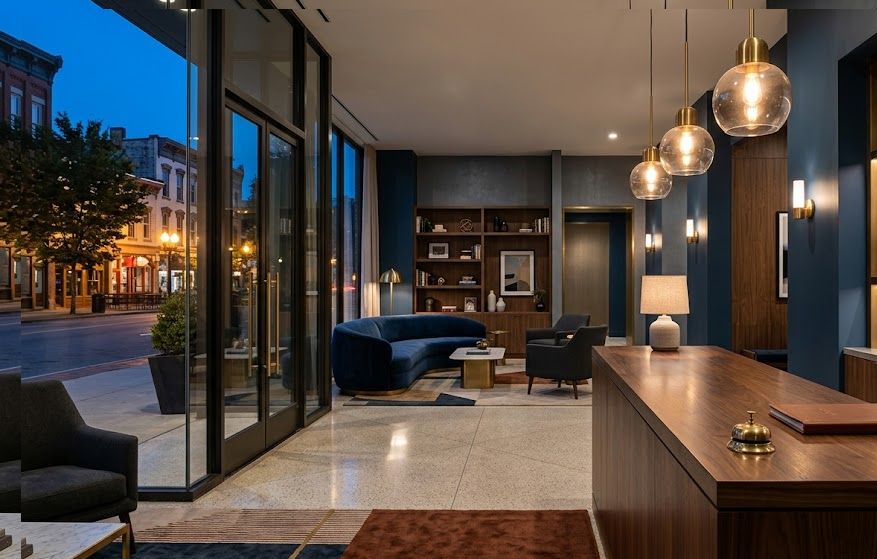
Hotel financing covers the business loans and credit lines hotel owners use to renovate rooms, replace equipment, carry payroll through slow seasons, and fund day-to-day operations. The main options are business lines of credit for seasonal swings, equipment financing for everything from laundry systems to PMS hardware, long-term loans for renovations, and SBA loans for major projects. Buying a property is a different conversation that runs through commercial mortgages and SBA real estate programs. This guide focuses on funding the hotel you already operate, which is where most owners actually need capital.
Lodging is a large industry with a built-in timing problem. US hotels and motels market generated $285.4 billion in 2026, and nearly all of that revenue arrives unevenly. A beach property earns most of its year between May and September, a ski-town inn does it in reverse, and a convention hotel lives quarter to quarter on the events calendar. The expenses never follow suit. Payroll, utilities, insurance, and maintenance run twelve months a year, and the biggest costs tend to land at the worst times, like a failed HVAC system in July or a franchise-mandated renovation due before the busy season.
That renovation point deserves its own mention. Owners operating under a flag know the property improvement plan cycle well: brands periodically require updated rooms, lobbies, and systems as a condition of keeping the franchise. A PIP can run into six or seven figures on a timeline the owner does not control, which makes it one of the most common reasons an otherwise healthy hotel seeks outside capital.

See How Much Capital Your Business Can Access & Start Growing Today!
Apply NowThe right structure depends on what the money is for, and hotels usually need more than one tool over time. Direct online lenders such as BusinessCapital.com underwrite hotels on recent revenue and bank deposits rather than long credit histories, which suits an industry where strong seasons and slow seasons sit side by side in the same bank statement.
| Hotel need | Best-fit option | Why it fits |
|---|---|---|
|
Carrying payroll and utilities off-season |
Business line of credit |
Draw in slow months, repay in peak months |
|
Laundry, kitchen, HVAC, PMS, furniture |
Equipment financing |
The purchase itself backs the loan, little or nothing down |
|
Room refresh, PIP work, property upgrades |
Long-term loan |
Spreads a large project over years of revenue |
|
Major renovation or expansion |
SBA loan |
Larger amounts, longer terms, lower rates |
A business line of credit is the natural first tool for seasonality, since it turns the strong months into a cushion for the weak ones. We have covered the broader case for that structure in the piece on when hospitality businesses should use a line of credit; for a hotel specifically, the pattern is drawing through the shoulder season and clearing the balance at peak. Equipment financing handles the capital-heavy hardware a property runs on, from commercial laundry to kitchen lines to keycard and property-management systems, usually with a small or no down payment because the purchase secures the loan. For guest-facing renovations and PIP compliance, a long-term loan matches a multi-year payoff to an upgrade that will earn for years. And for the largest projects, SBA loans bring the lowest rates and longest terms in exchange for more paperwork and a 30-to-90-day timeline.
One boundary worth drawing: purchasing a hotel or its real estate typically runs through SBA or conventional commercial channels with an equity contribution, and hotels sit in the special-use category that carries higher down payment expectations.
The details are covered in our guide to down payments on business loans.
Lenders reviewing a hotel look at the same core factors as any business, read through a hospitality lens. Monthly revenue and deposit history matter most to revenue-based lenders, and they will average your deposits across six to twelve months rather than judging the slowest one. Time in operation counts, with online lenders comfortable around the six-month mark and banks preferring two years or more. Credit matters least at alternative lenders and most at banks, where scores in the high 600s are the norm.
Hotels can make their own case stronger with a little preparation. Apply on the strength of your peak months, when trailing deposits look best. Have occupancy figures or booking reports ready, since they explain revenue patterns better than bank statements alone. And if the request is tied to a renovation or a PIP, bring the contractor quote or the brand's requirement letter, because a documented purpose with a defined cost is the easiest kind of loan to approve.
The most expensive way to borrow is under pressure in the middle of a slow season. The cheapest is arranging capital when the numbers look strongest, then letting it sit ready. Owners who set up a credit line at the end of peak season, or finance equipment before the busy stretch begins, get better terms and never face a July breakdown with an empty account. In a business where the calendar drives everything, financing works best when it follows the same rhythm.
What credit score do you need for hotel financing?
It depends on the lender. Banks generally want scores in the high 600s, while revenue-based online lenders can work with scores around 500 when deposits are strong. Equipment financing is often the most accessible product because the purchase secures the loan.
Can I get hotel financing with seasonal revenue?
Yes. Lenders familiar with hospitality average your deposits over six to twelve months instead of judging a single slow month. Applying during or just after your peak season presents the strongest possible file.
How do owners finance a PIP or brand-required renovation?
Most commonly with a long-term loan sized to the project, sometimes paired with equipment financing for the hardware portions. Bring the brand's requirement letter and contractor quotes, since a documented scope makes approval faster.
Can I use a business loan to buy a hotel?
Buying a property runs through SBA programs or conventional commercial lending rather than working capital products, and special-use properties like hotels typically require a meaningful equity contribution. The options in this guide fund the operations of a hotel you already run.
How fast can a hotel get funded?
Working capital products from online lenders can fund within days once bank statements are in. Equipment financing usually follows a vendor quote quickly. SBA and bank loans take 30 to 90 days, which suits planned renovations more than urgent repairs.



Sign up for our newsletter to get exclusive updates and offers

Start our simple online application now.

See what our clients have to say about their experience with us.

© 2026 BusinessCapital, LLC
