





By using our website, you agree to the use of cookies as described in our Cookie Policy
Ready to apply for business funding?
Start our simple online application now.



Choosing a business lender isn't just about who will approve you.
It's about finding the right match between what you need and what they offer. Banks provide the lowest rates but the strictest requirements.
Online lenders move fast and work with more credit profiles but charge more. SBA lenders offer excellent terms if you can wait.
Alternative financing fills gaps when traditional options don't fit.
The best lender for you depends on how much you need, how fast you need it, what you qualify for, and what you're willing to pay.
Before comparing individual lenders, understand the categories. Each type has distinct characteristics.
Banks are the oldest and most established source of business financing. They include national giants like Chase, Bank of America, and Wells Fargo, plus regional and community banks.
What they offer:
What they require:
Best for: Established businesses with strong financials who can wait several weeks for funding and want the best possible rates.
Not ideal for: Newer businesses, those with credit issues, or anyone who needs money quickly.
Credit unions function similarly to banks but are member-owned nonprofits. This structure sometimes translates to more favorable terms and more personalized service.
What they offer:
What they require:
Best for: Business owners who are already credit union members or can easily join, and who value personal relationships with their lender.

See How Much Capital Your Business Can Access & Start Growing Today!
Apply NowOnline lenders emerged over the past decade to serve businesses that banks overlook. Names like OnDeck, Fundbox, BlueVine, and Kabbage (now American Express Business Blueprint) dominate this space.
What they offer:
What they require:
Best for: Businesses that need funding quickly, those with less-than-perfect credit, and newer businesses that don't qualify for bank financing.
Tradeoff: Higher interest rates than banks, often 15% to 50% APR depending on your profile.
SBA loans aren't made by the government directly. They're made by banks and other lenders, with the Small Business Administration guaranteeing a portion. This guarantee encourages lenders to offer better terms.
What they offer:
What they require:
Best for: Businesses planning major investments like real estate, equipment, or expansion who can wait 30 to 90 days for funding.
The SBA's 7(a) program is the most common. The 504 program focuses on real estate and large equipment. Microloans serve smaller funding needs.
This catch-all category includes merchant cash advance providers, invoice factoring companies, equipment financing specialists, and other niche players.
Merchant cash advances:
Invoice factoring:
Equipment financing:
Best for: Businesses with specific needs these products address, or those who don't qualify for other options.
Once you know which lender types might work for you, dig into specifics. These factors matter most.
The interest rate is important, but it's not everything. Total cost of borrowing is what actually matters.
Look at:
APR (Annual Percentage Rate). This includes interest plus fees, expressed as a yearly rate. APR lets you compare different products on equal footing.
Factor rates. MCAs and some short-term loans use factor rates instead of APR. A factor rate of 1.3 means you repay $1.30 for every $1 borrowed. To compare with APR, you need to calculate the effective annual rate based on your repayment period. Our guide on business loan interest rates explains this in detail.
Origination fees. Some lenders charge 1% to 5% of the loan amount upfront. This adds to your effective cost.
Other fees. Application fees, closing costs, late payment fees, prepayment penalties. Read the fine print.
The cheapest-looking loan isn't always cheapest once you add everything up. Calculate total repayment amount before deciding.
How quickly do you need the money?
| Lender Type | Typical Timeline |
|---|---|
| MCA providers | Same day to 48 hours |
| Online lenders | 1 to 5 days |
| Equipment financing | 3 to 14 days |
| Credit unions | 1 to 4 weeks |
| Banks | 2 to 8 weeks |
| SBA lenders | 30 to 90+ days |
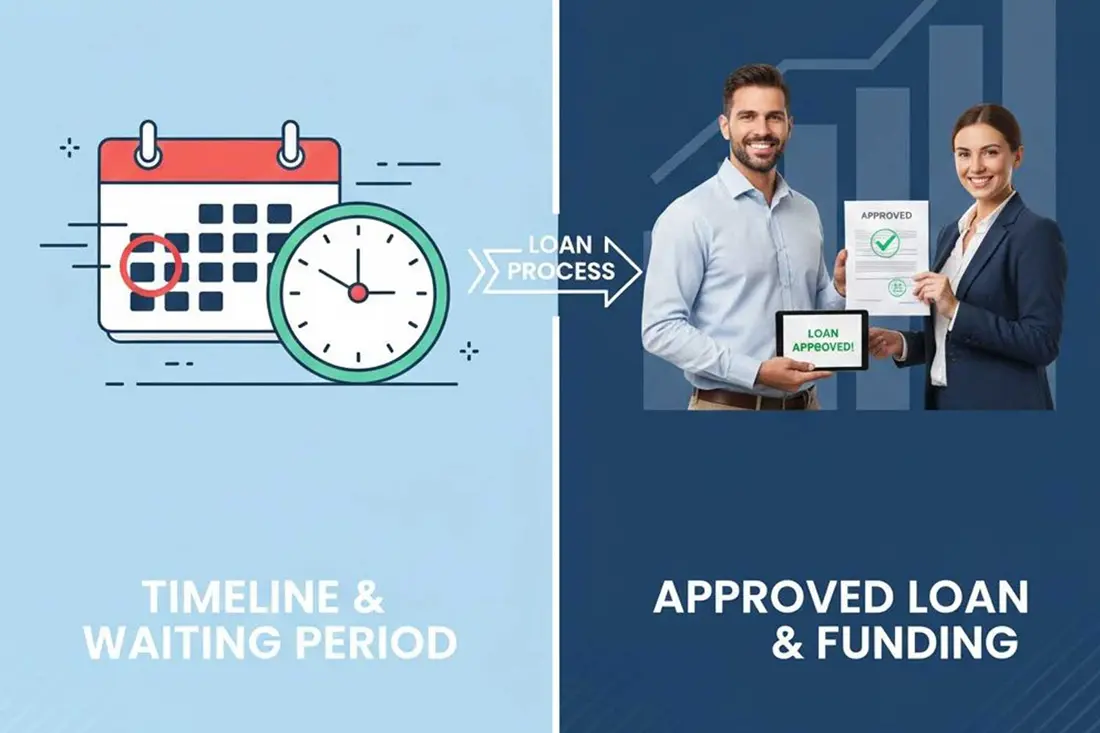
If you need same-day funding, your options narrow significantly. If you have time, you can access better rates. For more detail on timelines, see our breakdown of how long business loans take.
Different lenders serve different funding needs.
If you need $50,000, most lender types can help. If you need $2 million, you're looking at banks or SBA. Match the lender to your funding need.
Be realistic about what you qualify for.
If your credit score is below 650: Focus on online lenders, MCAs, and invoice factoring. Banks and SBA won't work. See our guide on bad credit options.
If you've been in business less than two years: Online lenders and alternative financing are your primary options. Banks want more history.
If your revenue is under $100,000 annually: Many lenders have minimum thresholds. Look for those that serve smaller businesses.
If you need unsecured financing: Online lenders and MCAs don't require collateral. Banks often do. Our unsecured loan guide covers options.
Applying to lenders whose requirements you don't meet wastes time and creates unnecessary credit inquiries. Target lenders where you actually fit.
How you repay affects your cash flow as much as the loan amount.
Term length: Longer terms mean lower monthly payments but more total interest paid. Shorter terms cost less overall but require higher payments.
Payment frequency: Some lenders collect monthly, others weekly, others daily. Daily and weekly payments can strain cash flow even when the total amount is manageable. Make sure the payment schedule works for your business rhythm.
Fixed vs. variable rates: Fixed rates provide predictability. Variable rates might start lower but can increase over time. Know which you're getting.
Prepayment flexibility: Some lenders charge penalties for paying off early. Others allow prepayment without penalty. If you might pay off early, this matters.
Not all lenders are created equal. Some have been around for decades with solid reputations. Others are newer or have mixed track records.
Check:
Reviews and ratings. Look at Better Business Bureau ratings, Trustpilot, Google reviews. Look for patterns in complaints.
Years in business. Established lenders are generally more reliable than brand-new entrants.
Transparency. Do they clearly disclose rates, fees, and terms? Evasiveness is a red flag.
Customer service. Can you reach a human when you have questions? Some online lenders are frustratingly automated.
According to a J.D. Power 2023 survey on small business banking, customer satisfaction varies significantly across lenders. The best-rated institutions scored 20% higher than the worst on overall satisfaction. That gap reflects real differences in how lenders treat borrowers.
Some lenders are transactional. You get money, you repay, done. Others build ongoing relationships.
Relationship benefits might include:
Banks and credit unions are generally more relationship-oriented. Online lenders tend to be more transactional. Which matters to you depends on your preferences and plans.
If you anticipate needing multiple rounds of financing as your business grows, starting a relationship now can pay off later.
Before committing, get clear answers to these questions:
What is the APR or total cost of this loan? If they won't give you a straight answer, that's a problem.
What are all the fees involved? Origination, closing, documentation, wire transfer, late payment, prepayment. Get the complete picture.
What is the repayment schedule? Monthly, weekly, daily? Know exactly when payments are due and how much.
Is there a prepayment penalty? If you want to pay off early, can you do so without extra cost?
What happens if I miss a payment? Understand the late fee structure and what triggers default.
How long will funding take? Get a realistic timeline, not a best-case scenario.
What documentation do you need? Make sure you can actually provide what's required.
Will this loan be reported to credit bureaus? Understand how this affects your personal and business credit.
Can I speak to a human if I have problems? Test this before you need it.
Some lender behaviors should make you cautious.
Guaranteed approval before reviewing your application. No legitimate lender promises approval without looking at your information. This is a classic predatory tactic.
Pressure to sign immediately. Good lenders give you time to review terms. High-pressure tactics suggest they don't want you to look too closely.
Vague or hidden terms. If you can't get clear answers about rates, fees, or repayment structure, walk away.
Upfront fees before funding. Legitimate lenders deduct fees from loan proceeds or collect them at closing. Requests for payment before you receive funds are scam indicators.
Interest rates that seem too good. If someone is offering rates far below market, something's wrong. Either there are hidden fees, or it's not a legitimate offer.
No physical address or verifiable business information. Do basic due diligence. Make sure the lender actually exists and has a real operation.
The business lending space has legitimate players and predatory ones. Higher rates for higher-risk borrowers are normal market dynamics. Deceptive practices are not. Know the difference.
Rather than randomly approaching lenders, develop a strategy.
Before you shop, understand where you stand:
This assessment tells you which lender categories are realistic options.
If you qualify for bank or SBA financing and have time, start there. These offer the best terms. Even if you're not sure you'll qualify, it's worth checking if the timeline works.
If banks aren't an option or you need speed, online lenders are your next tier. Compare several to find the best rates for your profile.
MCAs and other alternative financing should generally be last resorts due to cost, unless they specifically fit your situation better than other options.
Don't accept the first approval you get. Apply to two or three lenders whose requirements you meet. Compare the offers:
Having multiple offers also gives you negotiating leverage. Some lenders will match or beat competitor terms.
If you're going to need financing repeatedly as your business grows, think beyond this single loan.
Starting with a smaller loan and repaying it successfully builds your relationship with that lender. Next time, you'll qualify for more and possibly better terms.
Building business credit now opens options later. Every loan you repay responsibly strengthens your profile.
A slightly more expensive loan from a lender who might become a long-term partner could be worth it versus the cheapest option from someone you'll never work with again.
Here's a quick guide based on common scenarios.
Established business, strong credit, not in a hurry: Start with banks or SBA lenders. You'll get the best rates and terms available.
Good business, decent credit, need funds in one to two weeks: Online lenders are your sweet spot. Fast enough to be practical, better rates than MCAs.
Newer business or credit challenges: Online lenders that specialize in your situation. Some specifically serve businesses with bad credit or limited history.
Need money today or tomorrow: MCAs or online lenders with same-day funding. You'll pay for the speed, but sometimes that's necessary.
Large equipment purchase: Equipment financing specialists. The equipment as collateral often means better terms than general-purpose loans.
Cash flow timing issues: Invoice factoring or a line of credit. These address timing gaps without taking on a large lump-sum loan.
Real estate or major expansion: SBA 504 or 7(a) loans. The long terms and low rates make big investments more manageable.
Should I use a loan broker?
Brokers can help match you with lenders and save time shopping around. Good brokers know which lenders work best for different profiles. The downside is potential broker fees and the fact that they may steer you toward lenders that pay them higher commissions. If you use a broker, ask about their compensation structure and still do your own due diligence.
Is it better to borrow from a bank where I already have accounts?
Often yes. Existing relationships can lead to better terms, faster approvals, and more flexibility. Banks prefer lending to customers they know. That said, don't assume your bank has the best offer. Compare their terms with other options to make sure you're getting a competitive deal.
How many lenders should I apply to?
Two to four is usually sufficient. Enough to compare offers without creating excessive credit inquiries. Research first to target lenders where you meet the requirements, then apply to your top choices.
What if I get different amounts from different lenders?
This is normal. Different lenders have different risk models and arrive at different maximums. If you need a specific amount, focus on lenders who can provide it. If you're flexible, you might accept a smaller amount from a lender with better terms.
Can I negotiate loan terms?
Sometimes. Banks and credit unions have more flexibility than online lenders using automated pricing. Having competing offers gives you leverage. Strong applicants have more negotiating power than borderline ones. It doesn't hurt to ask for better rates or lower fees.
Should I use a line of credit or a term loan?
Lines of credit provide flexibility for ongoing or unpredictable needs. Term loans work better for one-time purchases or investments. If you know exactly what you need the money for and when, a term loan is often simpler. If your needs vary, a line of credit gives you access without committing to borrow.


Sign up for our newsletter to get exclusive updates and offers

Start our simple online application now.

See what our clients have to say about their experience with us.

© 2026 BusinessCapital, LLC
